I do a lot of garden planning and record keeping. Not because it’s strictly necessary, each gardener comes to the task with her own style, preferences and skills. The best gardener I know tends an enormous, gorgeous permaculture garden with a very minimal amount of planning and it obviously works, the proof is in the pudding! For me, sitting dreamily with a pad of graph paper and sketching out possibilities for gardens is absolute heaven, and I have been at it ever since I discovered myself a gardener at the ripe old age of 14. Don’t get me wrong, I know dreaming and planning are not the same thing, and it is much more fun to sketch out possibilities than to nail down realities, and least fun of all to actually carry out your plans through the quagmire of real life problems that any plan eventually encounters.
But, I have been working at harnessing my dreamer side to my practical side for 30 years now and I am exceedingly proud to say that I have made some progress. I now make and follow a garden plan every year. I have even come so far as to say that following my plan is, not exactly easy, but a relief. When I have a gap of a few hours to put into garden work in July, I don’t have to wonder what to do, I just pull out my monthly list. I do all the figuring in winter, when I have the mental space for it. (Well, most of the figuring. Best laid plans of mice and men, and what not. I end up having to refigure stuff regularly as snails decimate a planting, or weeds take over, or the spinach bolts at just 2” tall.)
Not every garden needs a schedule. In Alaska I did all my planting in May because the season was so short, succession crops didn’t work and I certainly didn’t need to worry about timing of the so-called summer crops like tomatoes and beans, it was a purely a “spring crops” climate. Apart from my little patch of kale and potatoes, I had a hedge of raspberry bushes, some poorly fruiting strawberry plants, and a few perennial herbs. In Alaska I focused much more on wild harvesting, gardening was just a side thing. Not much planning was needed to tend that simple garden.
But here in Eugene, I am making plantings in my very large vegetable garden 9 months out of the year: spring crops, summer crops, fall crops, winter crops, not to mention monthly plantings of salad. Then there is the lovely riot of fruit trees, berry bushes, native plants, and old-lady flowers that I permacultured into being which needs regular weeding, mulching and pruning. I have a big, complex garden, and that is surely part of how I finally made planning work for me— desperation.
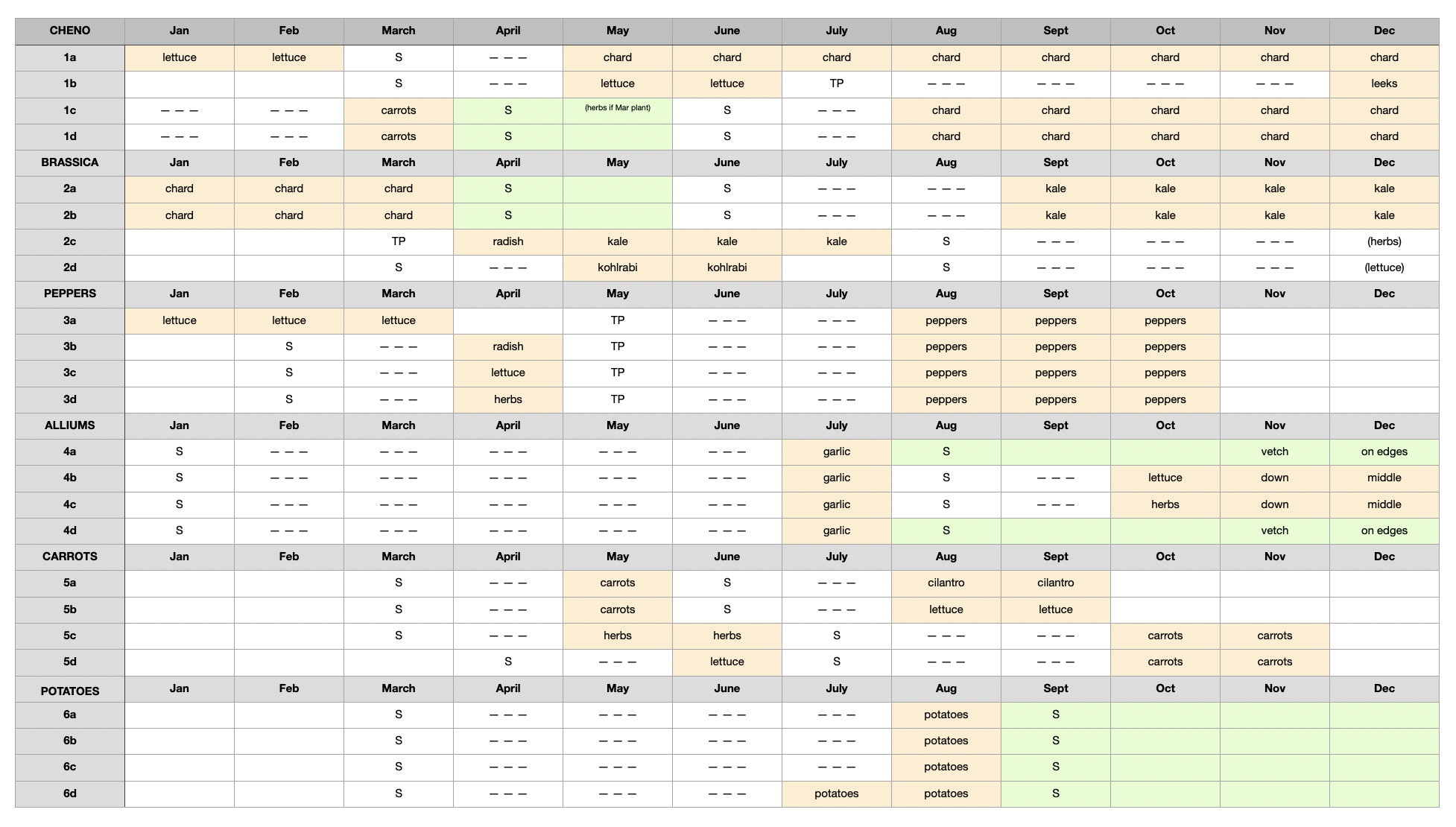
My garden plan is 2-part. First I make a calendar of which crops go where. I have named and numbered my vegetable beds to make this possible, and then further divided each bed into quarters: a, b, c, d. So for example Bed 2a tells me right where I need to plant the cucumbers. This part is important for orchestrating crop rotation, and I finally came around to putting this into a spreadsheet so that I can easily look over multiple years at once, or pull just one year out to print for my garden clip-board (more on that in a minute.)
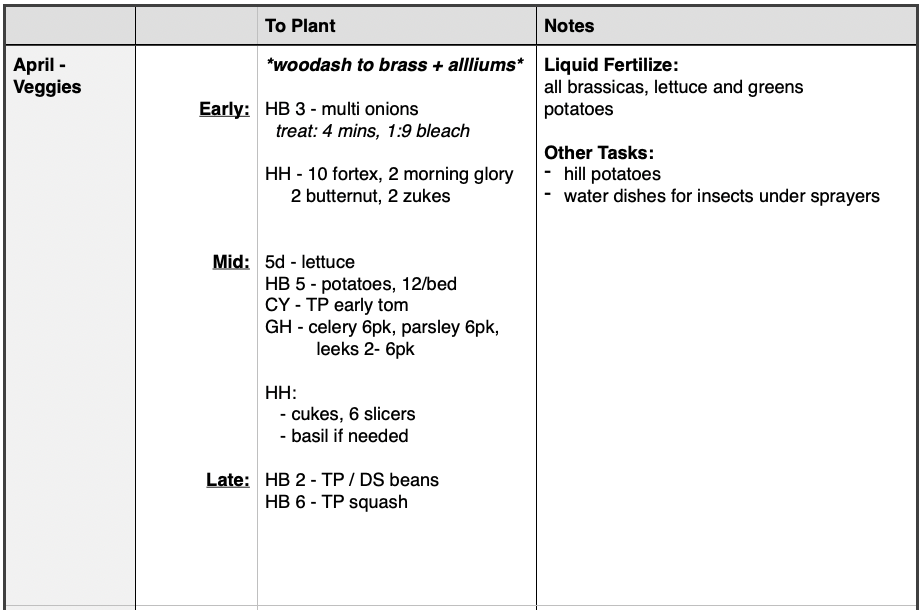
I could certainly stop there and just use my calendar to see what needed planting on that hypothetical July day. But I find it easier to have the tasks listed out by month. I am a list person, I love crossing things off. And then there is an unintended bonus— I write down the date that I actually made the planting when I cross it off, a useful tidbit of information if I am staring at an empty bed later in the month. “When did I plant that spinach? 2 weeks ago??!! It should definitely have germinated by now. Goddamn it, yet another mystery no-show spinach planting! Well, let’s try again…..” (I hope you are getting a sense of my relationship with spinach. Very S&M.)
Each month’s To-Do List is separated into two sections, the annual veggie beds and my otherwise garden. Most of the work happens in the veggie garden, which is further separated out into plantings by bed and other tasks. Because most plantings are just one quarter of a bed, 2’ x 3’, each planting goes very quick unless the bed has gotten weedy and need to be mucked out. Making lots of small plantings helps the work seem tackle-able, but also makes sure that I harvest food in usable quantities, one head of lettuce at a time, not a whole beds worth.
The most important step after making your garden plan is to keep it at hand. Maybe I’m lazier than you, but I have found that once I’m standing in the garden with a digging fork, I simply will not come into the house to get my To-Do List out of a drawer. I keep a clip-board with a few Garden Plan essentials right out on the back porch. I put the Calendar and a vegetable reference chart into plastic sheet protectors, then sandwich the To-Do List between them to keep it from getting damp with the dew or dirty when I’m carting the clipboard around the garden with me. I don’t put the To-Do List into a sheet protector because then how would I cross things off when I finished doing them???
This system has worked really well for me, but I am not trying to convince you to adopt my system. My sole purpose here today is just to encourage you to persevere in the task of garden planning, in whatever form works best for you. A plan should make things easier, at least in the long run, not harder. Have patience with yourself, move slowly toward your goal, take it one season at a time.
For inspiration and loads of practical advice on garden planning, check out my favorite gardening book Sustainable Market Farming: Intensive Vegetable Production on a Few Acres by Pam Dawling. Very applicable to large-scale home gardening, but not for beginners.


Penny for your thoughts…?